Solid Wood vs MDF Cat Trees: Stability & Wobble Tips
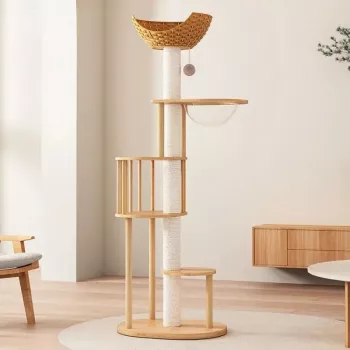
Is a solid wood cat tree more stable than particleboard or MDF cat trees?
Answer
Often, yes—but not automatically. A solid wood cat tree can be more stable than particleboard or MDF models because solid lumber typically offers higher strength-to-weight performance, holds fasteners well, and resists edge crumbling over time. That said, overall stability depends just as much on the design: a wide, heavy base, thick posts, secure hardware, and a balanced layout matter more than the label on the materials.
Particleboard and MDF can still be very stable when they’re used in a well-engineered build. These engineered woods are dense and consistent, which can help prevent warping, and many mass-market cat trees rely on their weight to anchor the structure. The downside is that if moisture gets into the panels or if screws are repeatedly tightened and loosened, the material can lose holding power—especially at corners and edges where stress concentrates.
Solid wood tends to shine for long-term rigidity. When cats launch onto a top perch or climb aggressively, solid wood framing and bracing can reduce sway and keep platforms feeling more secure. It also generally tolerates re-tightening hardware better, which is important because cat trees naturally loosen over time from vibration and repeated climbing.
For a quick stability check—regardless of material—look for: (1) a base that’s wider than the tallest footprint of the tree, (2) posts at least 4 inches in diameter for multi-cat homes or larger cats, (3) multiple attachment points for upper platforms, and (4) anti-tip options such as wall anchors if the tree is tall. If you want a deeper breakdown of material pros, cons, and what to look for in construction, see the full guide here: Is a solid wood cat tree more stable than particleboard or MDF cat trees?.
FAQ
What features make a cat tree less likely to wobble?
A wider, heavier base, thicker scratching posts, and platforms secured with multiple bolts reduce wobble. Keeping the tree on a non-slip surface and periodically tightening hardware also helps maintain stability.













Leave a comment