DIY Cat Tree Ideas: 5 Household Items to Repurpose
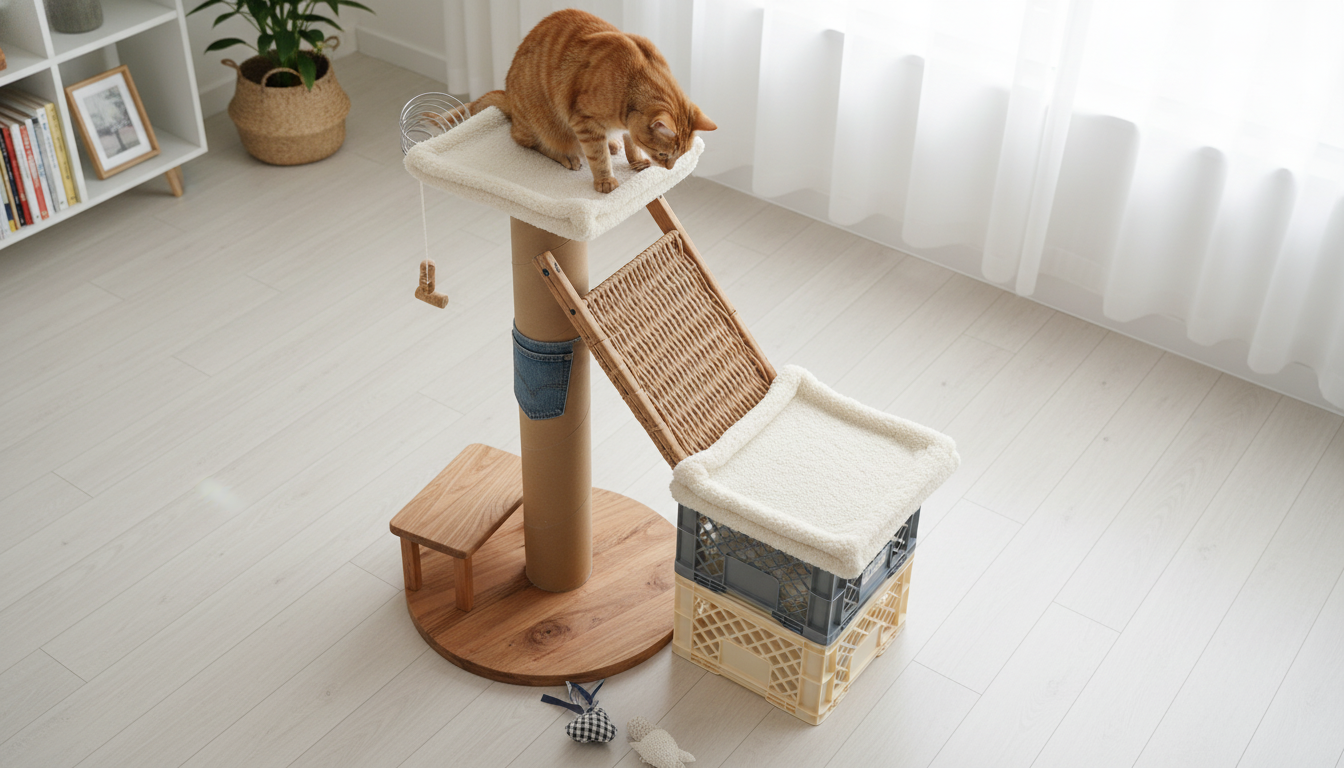
What can I turn into a cat tree?
A sturdy cat tree doesn’t have to start as a “cat product.” Many everyday items can become a safe climbing, lounging, and scratching setup—as long as they’re stable, splinter-free, and easy to secure. Here are practical ideas that work well in real homes.
Solid wood stool or side table
A wide-based stool or small side table can become a simple single-level perch. Add a non-slip mat or carpet tile on top for traction, and attach a scratching surface (like sisal wrap) around one leg. Choose hardwood or thick, solid construction so it won’t wobble.
Bookcase or cube shelf (anchored)
A low bookcase or cube organizer can turn into a multi-tier climber when it’s anchored to the wall. Use the cubbies as “caves,” then add carpet squares or shelf liners for grip. If cats will jump between levels, keep edges smooth and remove anything that can snag claws.
Old wooden ladder
A step ladder or decorative ladder makes an easy frame for platforms. Screw on wood planks as steps or resting spots, then wrap select rungs with sisal for scratching. Make sure it’s braced or anchored so it can’t tip when a cat launches onto it.
Sturdy cardboard boxes (temporary)
For a budget-friendly option, stacked boxes can become a short-term play tower. Reinforce corners with packing tape and cut entry holes for hideouts. Cardboard is great for scratching, but replace it once it softens or bows.
Real branches or a cut tree trunk (sealed and secured)
A thick, dry branch or trunk section can become a natural scratching post or centerpiece. Sand it smooth, seal it with a pet-safe finish, and mount it to a heavy base. Avoid treated lumber or anything with sap, mold, or pests.
If you want a long-lasting, furniture-grade setup, see this guide to a solid wood multi-tier cat tree with sisal scratcher and bed: https://evanele.com/guide-solid-wood-multi-tier-cat-tree-bed-sisal-scratcher/.
FAQ
How do I make a DIY cat tree stable and safe?
Use a heavy, wide base and prevent tipping by anchoring tall builds to a wall. Keep platforms large enough for turning around, cover slick surfaces for traction, and avoid loose staples, strings, or fabric that can unravel.















Leave a comment