
The best height for a shoe storage cabinet in an entryway or hallway is usually between 40 and 75 inches tall, depending on how much vertical space you can use and how you want the cabinet to function day to day. In tighter walkways, going taller (rather than wider) often delivers more storage without stealing floor space.
For narrow hallways: A tall, slim cabinet (about 60–75 inches) is typically the most efficient choice. It keeps the footprint small while maximizing capacity, which matters when doors swing nearby or traffic flows past the cabinet.
For standard entryways: A mid-height cabinet (about 40–55 inches) can be a comfortable “drop zone” height. The top is easy to use for keys, a tray, or a small lamp, and it’s less visually dominant than a full-height tower.
If the cabinet’s top will act like a console table, aim for a height that’s easy to reach while standing—often around 40–48 inches. If the goal is maximum shoe capacity and you don’t need a countertop surface, going taller makes sense as long as it doesn’t block switches, vents, artwork, or sightlines.
Before committing, measure your wall height and note obstacles (thermostats, coat hooks, outlets, and door trim). Also consider everyday reach: many people find shelves above 70–75 inches less convenient without a step stool, especially for frequently worn pairs.
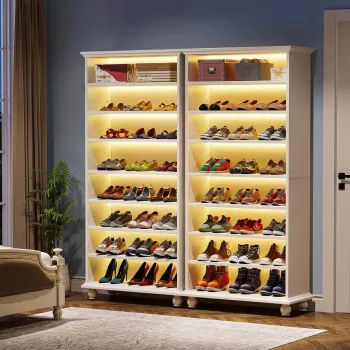
For compact spaces that still need serious storage, a tall multi-tier cabinet can be a smart upgrade. For a real-world example of a vertical solution designed for small entryways, see this guide: 9-tier tall shoe cabinet with LEDs for small entryways.
Leave at least 30–36 inches of clear walkway in front of the cabinet so doors can open and people can pass comfortably; more is better in high-traffic hallways.





Leave a comment