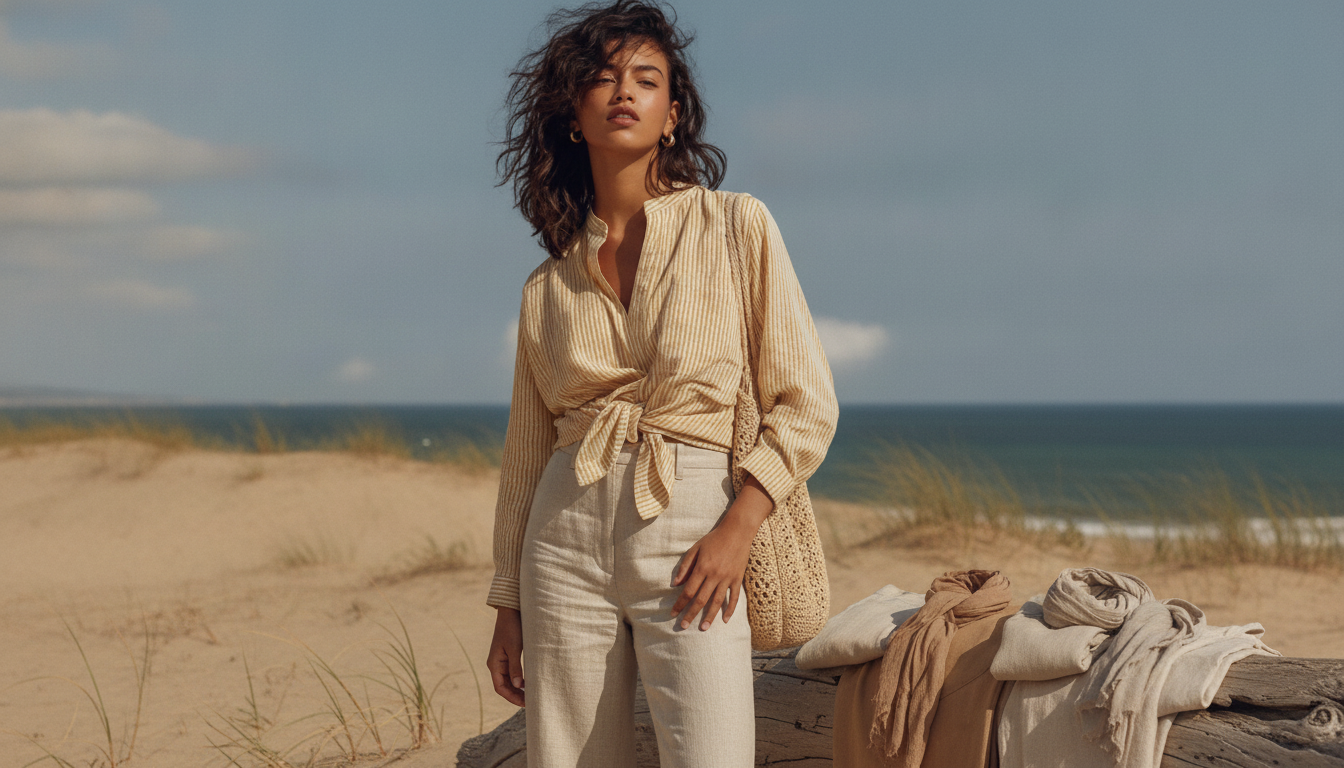
Linen has a rare mix of breezy comfort, effortless texture, and everyday durability. From humid summer days to year-round layering, linen clothing can feel cooler against the skin, look naturally relaxed, and last for seasons when cared for well. This guide breaks down what linen is, why it performs the way it does, how to choose quality pieces, and how to wash and wear linen so it keeps its softness and shape.
Linen is made from flax fibers, and that origin explains a lot about how it behaves. Flax is naturally strong and less elastic than many other plant fibers—one reason linen garments can hold their structure while still developing those familiar creases as you move.
Breathability comes down to fiber structure and weave. Linen’s fibers and typical weaves allow air to circulate readily, which helps heat and moisture move away from the body instead of lingering against the skin. That’s also why linen often feels “crisp” at first: finishing treatments and tightly packed fibers can make a new shirt or dress feel structured.
With wear and washing, linen usually becomes more supple as fibers relax and finishes wash out. The signature rumpled look is part of linen’s charm; the goal is comfortable drape, not a perfectly pressed finish.
Hot weather is where linen earns its reputation. Moisture management is a big part of it: linen can absorb and release moisture efficiently, which can help reduce that sticky, clingy feeling on humid days.
Airflow and weave matter just as much as fiber. Open weaves, looser fits, and lighter fabric weights tend to feel cooler than tight weaves or very fitted cuts. If linen has ever felt “too warm” to you, it’s often because the garment is cut slim or the fabric is dense and heavy.
For skin comfort, look for softened or garment-washed linen when possible. It tends to feel more broken-in right out of the package. If you’re sensitive to texture, prioritize looser silhouettes (a relaxed button-down, wide-leg pants, an A-line dress) to reduce friction and cling.
A simple layering trick: a lightweight linen button-down works as a sun layer over a tank or tee. You get shade and airflow at once—especially helpful for outdoor errands, beach days, and travel.
| Feature | What to Expect | Best For |
|---|---|---|
| Breathability | High airflow through the fabric | Hot climates, summer commutes, travel |
| Wrinkling | Natural creasing and relaxed texture | Casual outfits, resort wear, laid-back tailoring |
| Softness over time | Becomes smoother with washing and wear | Wardrobe staples worn often |
| Durability | Strong fiber with good longevity | Shirts, trousers, dresses, daily rotation pieces |
| Care needs | Gentle wash, avoid high heat, reshape while damp | Anyone who prefers low-fuss, natural fibers |
Not all linen feels or wears the same. Start with fabric weight and opacity. Very lightweight linen can be wonderfully airy, but it may be sheer in lighter colors and can show stress sooner in high-rub areas. Midweight linen often balances breathability with better drape and longevity—especially for pants, shirts you wear often, and shirt-dresses.
Construction details make a noticeable difference over time. Look for clean seam finishes (French seams are a plus), reinforced buttons, tidy stitching, and even hems. Those small choices reduce stress points where linen might otherwise strain or fray.
To make linen feel pulled together, footwear and one strong basic go a long way. Pair a relaxed linen outfit with bright, clean sneakers like Armani Exchange Men’s White Sneakers for a modern, minimal look that works from daytime travel to dinner.
If you want a deeper dive into linen’s feel, care, and styling, keep this resource handy: Linen Love: The Ultimate Guide to Cool, Comfy, and Conscious Clothing.
Linen’s reputation as a more conscious choice comes from both the flax plant and the potential for long wear. Flax can be a lower-input crop than some alternatives, but impacts vary by region, farming method, and processing. For background on the European flax and linen sector, the European Confederation of Linen and Hemp (CELC) is a helpful reference.
Processing matters, too. Retting methods and finishing choices influence the overall footprint, so transparent sourcing and reputable certifications can add confidence where they’re available. For broader fiber and materials context across the industry, see the Textile Exchange resources.
Durability is an underrated sustainability feature: a linen piece that lasts years often outperforms trend items replaced frequently. And everyday care choices count—cooler washes, line drying, and fewer washes can extend garment life while reducing energy use. The U.S. EPA’s guidance on reducing textile waste is a practical reminder that the greenest garment is often the one already in your closet, well cared for.
Yes, especially with high heat. Stick to cool washes and air-dry or use low heat, and always check the care label—pre-washed or garment-washed linen typically shrinks less.
Choose garment-washed linen when possible, and wash it before first wear with a gentle detergent. Avoid over-drying; linen usually softens naturally with a few wears and washes.
No—wrinkling is normal because flax fibers have low elasticity. Fabric weight, weave, and fit affect how wrinkles show; steaming or ironing while slightly damp can smooth things out without chasing a perfectly crisp look.






Leave a comment