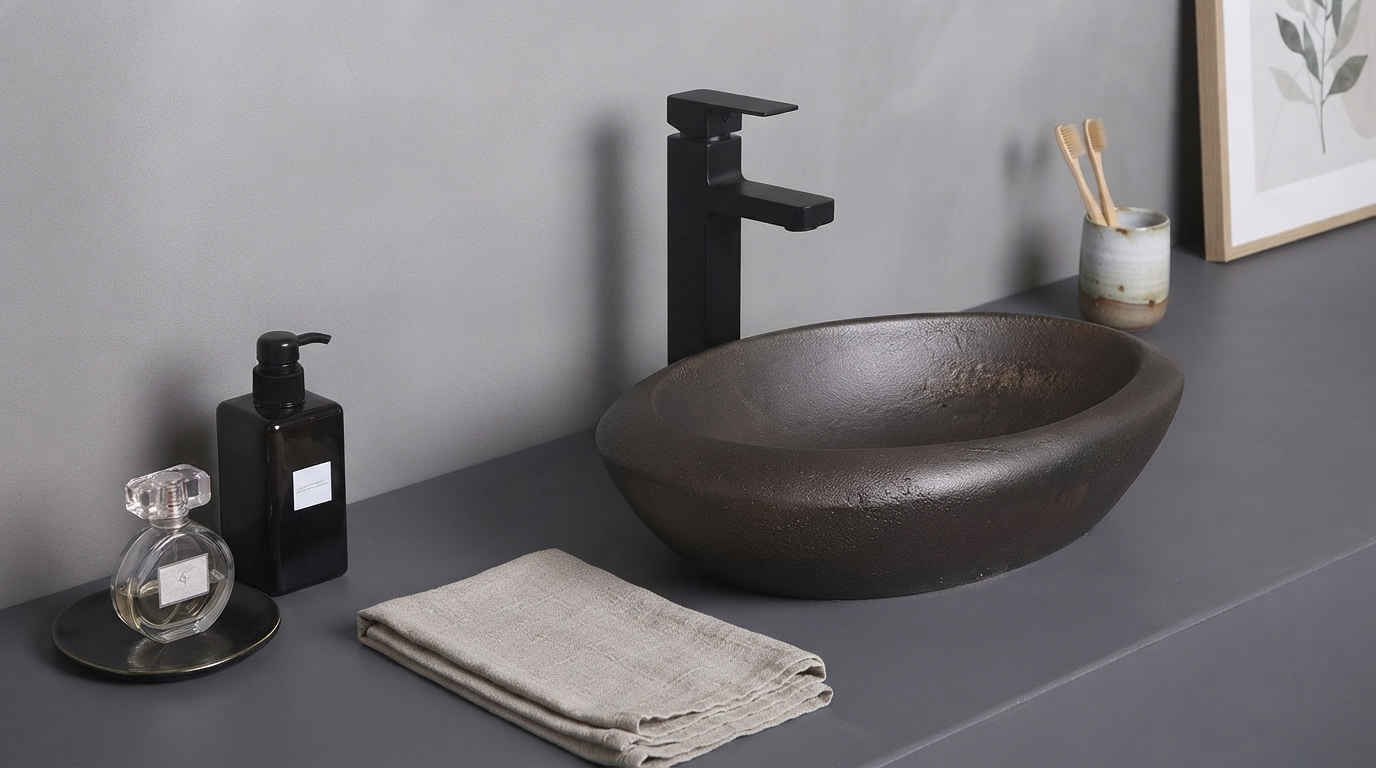
Glass vessel sinks don’t “break easily,” but they can crack or chip if they’re treated like a drop zone. Most quality models are made from tempered glass, which is stronger than standard glass and designed to handle everyday bathroom use. In normal conditions—handwashing, light countertop contact, routine cleaning—a properly installed glass vessel sink is typically durable.
Breakage usually comes from impact, stress, or poor installation. Dropping a heavy object (like a curling iron, perfume bottle, or metal tool) into the basin is the most common cause of chips and cracks. Over-tightening the drain assembly, placing the sink on an uneven surface, or failing to use the correct gasket/foam ring can create pressure points that lead to stress fractures over time.
Tempered glass is engineered to resist heat and minor impacts, but it still isn’t immune to sharp blows. Ceramic vessel sinks are hard and scratch-resistant, yet they can also chip if something heavy hits the rim. In practical terms, both materials hold up well in daily use; the biggest difference is that glass shows damage sooner if struck, while ceramic may hide small chips until you feel them.
Choose a reputable tempered-glass sink (often 1/2-inch thick or similar), install it on a flat, fully supported countertop, and avoid cranking down on the drain hardware. Use a non-abrasive cleaner and soft cloth, and keep heavy items off the edge of the basin. If kids commonly use the bathroom or the sink is in a high-traffic powder room, consider pairing it with a faucet that has a controlled, splash-reducing flow.
If you’re comparing materials and want practical guidance on fit, faucet pairing, and care routines, see this related sink guide: https://evanele.com/guide-brown-oval-ceramic-vessel-sink-fit-faucet-care-tips/.
No—most clean easily with a mild cleaner and a soft cloth. To prevent water spots, rinse and wipe dry after use, especially if you have hard water.






Leave a comment