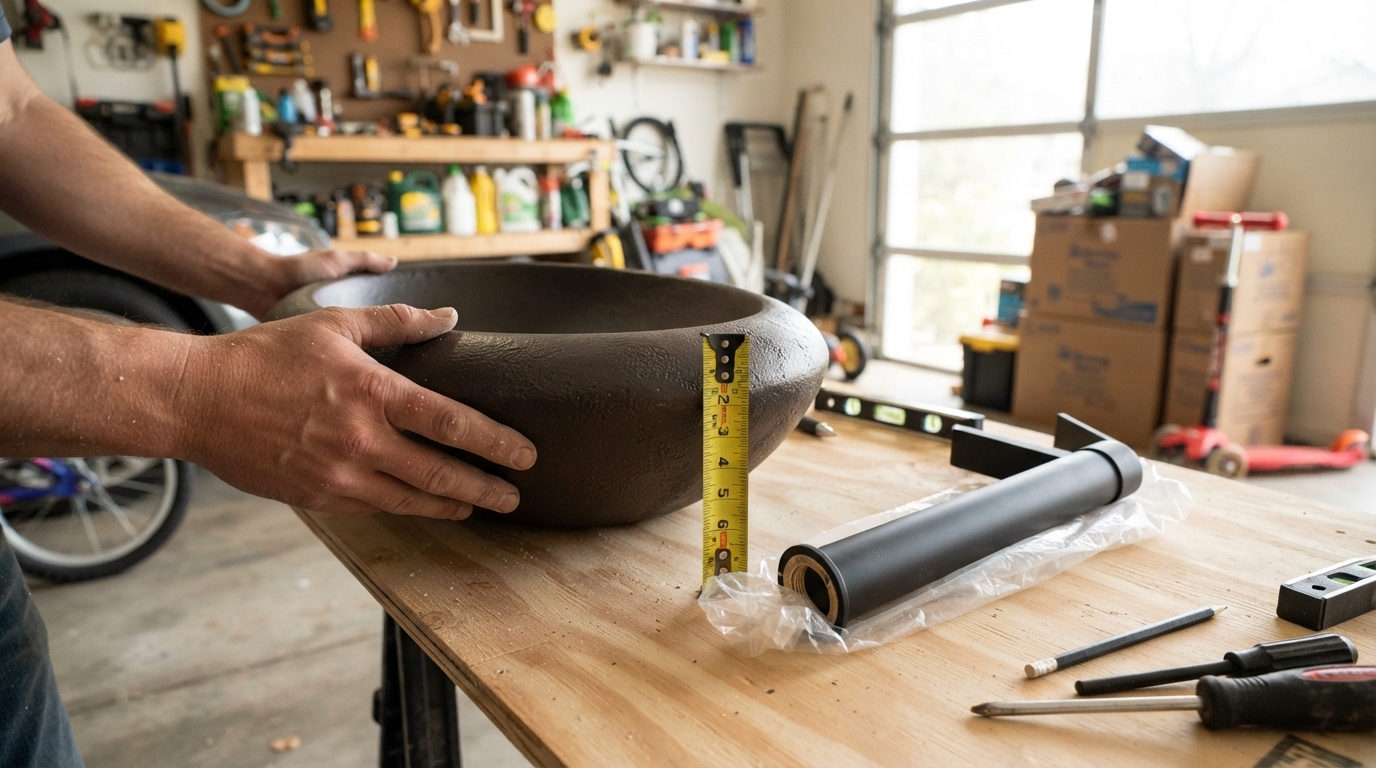
Not every vanity is ready for a vessel sink, but many can be used with a few must-have requirements. A vessel sink sits on top of the countertop (instead of dropping in), so the vanity and counter need to handle the sink’s footprint, plumbing, and faucet height without creating leaks or an awkward washing height.
Start with the countertop. You’ll need a flat, sturdy surface wide enough for the sink base and stable enough to support the sink’s weight when it’s full of water. Stone, solid-surface, and properly supported wood counters are common choices. If the vanity top is thin, flexible, or already damaged, it’s not a good candidate without reinforcement or a new counter.
Most vessel sinks use a standard drain opening, but the vanity must allow room beneath the counter for the drain body, trap, and water lines. Many installations use a vessel (non-overflow) drain unless the sink has an overflow channel. Also check the vanity’s top drawers and internal shelves—vessel-sink plumbing can interfere with storage, and you may need to modify or choose a vanity designed with a plumbing cutout.
A vessel sink often pairs with a tall vessel faucet (counter-mounted) or a wall-mounted faucet. Your vanity top must have either pre-drilled holes in the right position or enough space to drill safely. The spout should reach the bowl comfortably and hit near the center to reduce splashing. If you’re choosing a bowl style and want specifics on fit, faucet pairing, and upkeep, see this guide: brown oval ceramic vessel sink fit, faucet, and care tips.
Because the bowl sits above the counter, the finished rim height can end up too tall on a standard vanity—especially for kids. If comfort is a concern, consider a lower vanity, a shallower vessel sink, or a semi-recessed style that sits partially in the counter.
Often, yes. Many vessel sinks use a vessel-style drain without an overflow, unless the sink includes an overflow channel—then you’ll want an overflow-compatible drain to match.







Leave a comment