Homework Help for Parents: Calm Routines & Study Habits
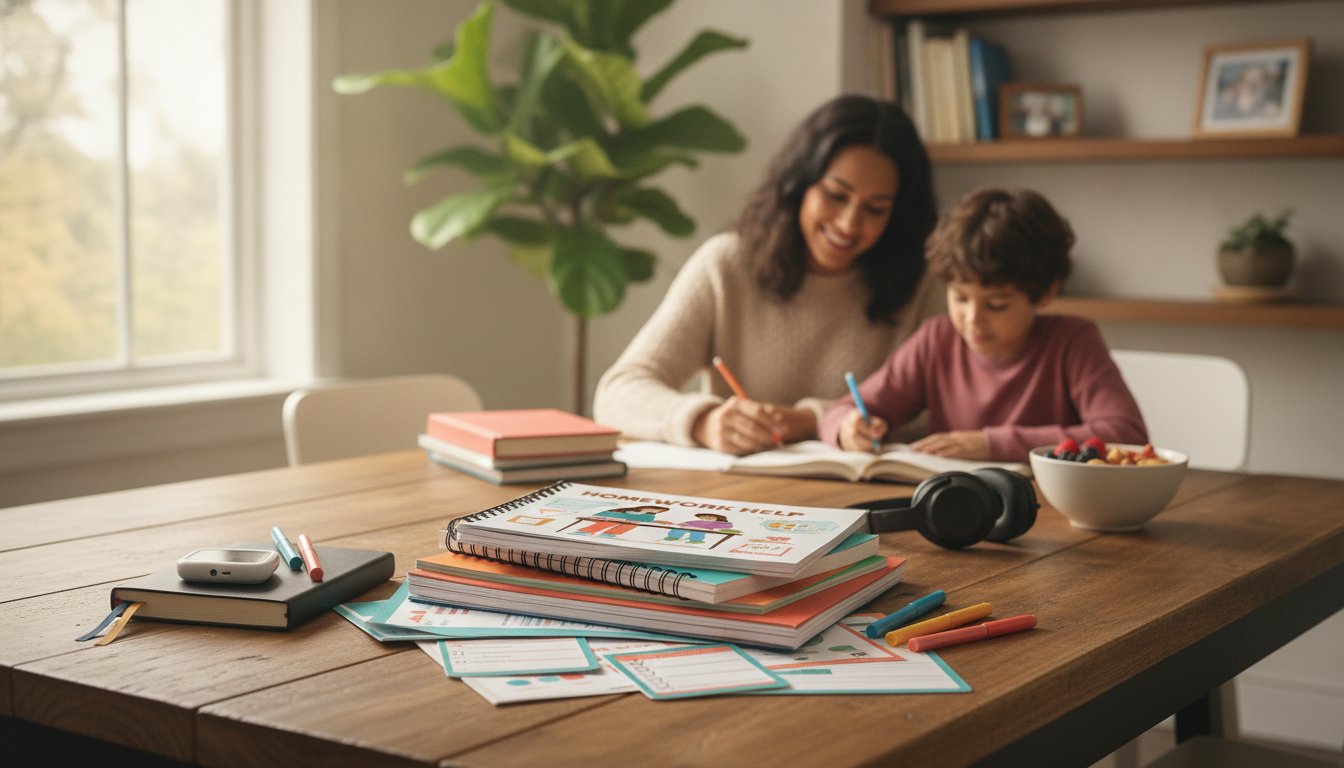
Homework Help Made Easy: A Parent Toolkit for Study Habits, Calm Routines, and Independent Learning
Homework goes more smoothly when kids know what to do, when to do it, and how to keep going when it feels hard. A simple, repeatable system reduces nightly conflict, builds confidence, and helps children practice independence—without parents becoming the “homework police.” Below are practical routines, parent scripts, and tools you can start using tonight, plus a printable toolkit that keeps the plan consistent.
Start with the real problem: time, friction, or skills
Before changing everything, pinpoint the bottleneck. For three school days, jot down: what was assigned, the start time, the finish time, where things derailed, and what triggered frustration (hunger, screens, fatigue, confusing directions).
Then separate “can’t do” from “won’t do.” If your child is trying but still stuck, a missing skill (or unclear instructions) is likely. If your child avoids, argues, or shuts down before starting, you may be dealing with overwhelm, low energy, or a routine that has too much friction.
Finally, align expectations with the teacher’s intent: is this practice, mastery, or long-term project work? Choose one change to test for a week so you can tell what helped.
| Roadblock | What it looks like | Try first (low-effort) | If it persists |
|---|---|---|---|
| Trouble starting | Stalling, asking for snacks/water/bathroom repeatedly | 2-minute setup + timer to begin | Shorten tasks into chunks; add a start script |
| Low focus | Wanders, fidgets, forgets directions mid-task | 10–15 minute work blocks + 3-minute breaks | Reduce distractions; consider earlier homework time |
| Overwhelm | Meltdowns, negative self-talk, shutdowns | One-problem-at-a-time cover sheet | Teach a calming routine; check assignment load with teacher |
| Skill gaps | Stuck despite effort; frequent errors | Model 1 example, then child tries next | Request targeted practice or tutoring guidance |
| Perfectionism | Erases repeatedly; won’t submit unless “perfect” | Define “done” criteria; set a hard stop time | Practice “good enough” drafts and revision later |
Build a homework routine that runs on autopilot
Routines work best when they’re boring—and the same every day. Pick a consistent “home base” (kitchen table, desk, counter) and pre-stock supplies: sharpened pencils, paper, calculator, charger, headphones, and a highlighter. When materials are ready, kids don’t need to ask for five things before they begin.
Use a predictable sequence such as: snack → movement → check planner → easiest task → hardest task → pack bag. A visual checklist beats repeated verbal reminders and helps kids feel in control. Keep the schedule realistic by estimating time per subject and adding a buffer so the night doesn’t become a race.
Decide a clear stop rule to prevent marathon evenings: a time cap (for example, stop after 45–60 minutes for elementary kids) or a completion cap (finish what’s reasonably assigned, then pause and communicate what’s incomplete). The CDC’s guidance on healthy sleep is a helpful reminder that rest matters for learning and emotional regulation.
Teach independent learning with simple prompts (instead of giving answers)
When kids get stuck, it’s tempting to rescue. The trade-off is that they learn to wait for you instead of using strategies. Swap answers for prompts that build independence:
- “What is the question asking you to do?”
- “Where could you find that information?”
- “What have you tried so far?”
- “Show me the step where it started feeling confusing.”
Try the “3 before me” rule: (1) reread directions, (2) check notes/textbook, (3) look at an example problem—then ask for help. Teach a repeatable process: read → underline key words → plan → solve → check. Over time, kids internalize the script.
Normalize productive struggle: effort is expected, and frustration is a cue to use a strategy, not a reason to quit. The American Psychological Association emphasizes skill-building habits that support confidence and performance.
Make homework calmer with boundaries, breaks, and attention supports
Many children focus better in short sprints. Start with 10–20 minutes of work followed by a 2–3 minute break. Keep breaks purposeful: stretch, water, a quick lap around the house, a few deep breaths, or tidying the desk. Scrolling is rarely a “reset,” so treat screens as a planned choice, not an automatic break.
Reduce friction by silencing notifications, keeping only the current assignment on the desk, and using a “question parking lot” sticky note. If your child has a question, they write it down and keep going on what they can do. That prevents constant derailments while still honoring confusion.
Use neutral language and avoid power struggles. Praise the process—starting on time, checking directions, persisting—rather than speed. If homework routinely pushes bedtime later, shift the start earlier or talk with the teacher about load and expectations.
Support executive skills: planning, organization, and follow-through
For more strategies on building independence and executive function, Edutopia offers practical classroom-informed ideas that translate well at home.
Printable support that keeps the system consistent
If you want an instant-use, low-prep option, try the Homework Help Made Easy Toolkit for Parents – Printable Guide for Creating Study Habits, Homework Strategies & Independent Learning. It’s designed to make routines easy to follow and easier to repeat.
Small tools that can make after-school routines easier
- Antony Morato Men’s Black Rubber Sole Slippers for Spring/Summer (easy on/off for quick movement breaks)
- Armani Exchange Men’s White Sneakers (supportive option for a short after-school walk)
When to involve the teacher (and what to ask)
FAQ
What happened to homework help on Google?
Google has changed how it presents homework-related results over time due to evolving features and quality systems, so answers can be less straightforward than they used to be. Many families now rely on a mix of school portals, reputable education sites, and consistent home routines that focus on learning the process—not copying answers.














Leave a comment