Solid Wood Multi-Tier Cat Tree with Bed & Sisal Scratcher
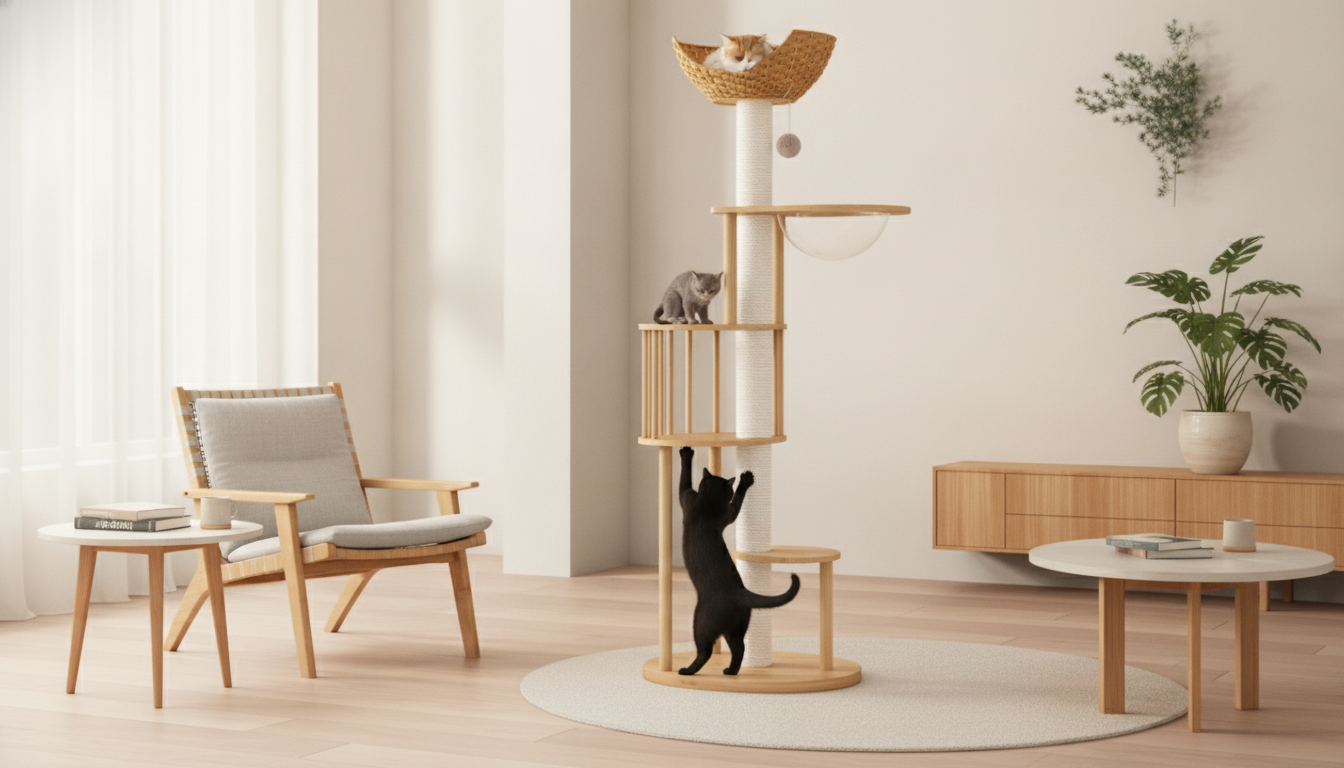
Solid Wood Multi-Tier Cat Scratching Tree with Bed, Toys & Sisal Scraper: A Home Base for Climbing, Scratching, and Naps
Cats do best when everyday behaviors—scratching, climbing, perching, and resting—have a consistent “yes” spot in the home. A solid-wood, multi-tier cat scratching tree with a cozy bed, hanging toys, and a sisal scratching surface creates a single, stable station that supports natural instincts while helping redirect attention away from furniture corners and rugs. For indoor cats especially, that mix of vertical space and predictable comfort can make the difference between a bored cat roaming for trouble and a content cat rotating between play, scratching, and naps.
What This Cat Tree Adds to a Cat’s Daily Routine
- Scratching outlet: Gives a dedicated place to scratch, helping satisfy instinctive claw behavior and reducing interest in sofas, rugs, and doorframes.
- Vertical space: Multi-tier levels provide safe vantage points—often a big confidence boost for timid cats and a practical “traffic solution” in multi-cat homes.
- Rest zone: A built-in bed encourages a reliable nap spot, which can cut down on random sleeping in laundry baskets or on kitchen counters.
- Play triggers: Dangling toys invite quick self-directed play sessions, which can reduce boredom between longer sleep cycles.
Core Features to Look For (and Why They Matter)
Solid wood frame
A heavier, sturdier frame helps minimize wobble during jumps and sudden turns. Many cats test stability without realizing it—one slippery landing can make a shaky structure “not worth it” in their mind.
Multi-tier layout
Cats often prefer moving upward in steps rather than making one big leap. A tiered design creates a natural route: hop, pause, look around, hop again. That pattern mirrors how cats explore shelves and window ledges—just in a cat-approved zone.
Bed/perch comfort
A defined bed can become the primary resting spot when it’s placed in the right area (near a window for entertainment, or in a quiet corner for security). The more predictable the resting spot, the less likely a cat is to “collect” new nap locations around the house.
Sisal scratching surface
Sisal is widely used because the texture is satisfying for claw maintenance and tends to hold up under repeated scratching. International Cat Care notes that scratching is a normal, necessary behavior—providing appropriate surfaces is often key to protecting household items.
Hanging toys
Simple toys positioned along the climb path can spark quick engagement. They work best where your cat naturally pauses—near a platform edge or just below a perch—so batting feels like part of the climb-and-lounge routine.
At-a-Glance Comparison: Cat Needs and Matching Elements
Use this quick mapping to see whether the structure supports the behaviors your cat shows most—heavy scratching, constant climbing, or frequent napping. If multiple cats share one tree, prioritize stability and multiple resting spots so one cat can’t easily “claim” the entire structure.
| Common behavior | What it signals | Best-matching feature |
|---|---|---|
| Scratching furniture edges | Needs a preferred scratching texture and location | Sisal scraper placed near high-traffic areas |
| Jumping onto shelves/cabinets | Seeks vertical territory and vantage points | Multi-tier platforms that create an easy climb route |
| Zoomies and boredom play | Needs short play opportunities between naps | Hanging toys positioned along the climb path |
| Sleeping on laundry/sofa corners | Wants a consistent, cozy resting zone | Integrated bed/perch in a calm location |
Placement Tips That Make a Cat Tree More “Irresistible”
- Put it where your cat already spends time: Near a window, beside a favorite sofa corner, or along a common walking path.
- Avoid isolating it: A cat tree tucked in a back room may be ignored unless that room is already a preferred hangout.
- Stabilize the base: Place on a flat surface; on hard floors, add a grippy mat underneath to reduce sliding during takeoffs and landings.
- Make the bed the reward: A familiar blanket or a small sprinkle of catnip (if your cat responds to it) can speed up adoption.
- If scratching doesn’t start immediately: Use a scratch attractant or gently guide paws to the sisal area—avoid forcing or scolding, which can create negative association.
Care, Cleaning, and Keeping the Scratching Surface Effective
Who This Style Works Best For
Product Snapshot
Name: Solid Wood Multi-Tier Cat Scratching Tree with Bed, Toys & Sisal Scraper
More in-stock items
Helpful Cat Behavior References
- International Cat Care — Scratching Behaviour in Cats
- ASPCA — Cat Care & Behavior
- Cornell Feline Health Center — Health Information & Enrichment Resources
FAQ
How do you get a cat to use a scratching tree instead of furniture?
Place the tree next to the furniture being scratched, then reward any interaction (sniffing, pawing, climbing) so the new spot becomes “worth it.” Use catnip or a scratch attractant on the sisal, redirect calmly, and avoid punishment—consistency and convenience usually win.
Is sisal a good material for cat scratching?
Yes—many cats like the rough, grippy texture, and it tends to be durable under repeated use. Preferences still vary by cat, so placement and gentle encouragement help the most.
Where should a multi-tier cat tree be placed in the house?
Choose a stable, flat spot in a socially relevant area, such as near a window or in the main family room, and keep it away from loud appliances. In multi-cat homes, make sure the approach paths aren’t blocked so cats can climb up and down without getting cornered.















Leave a comment