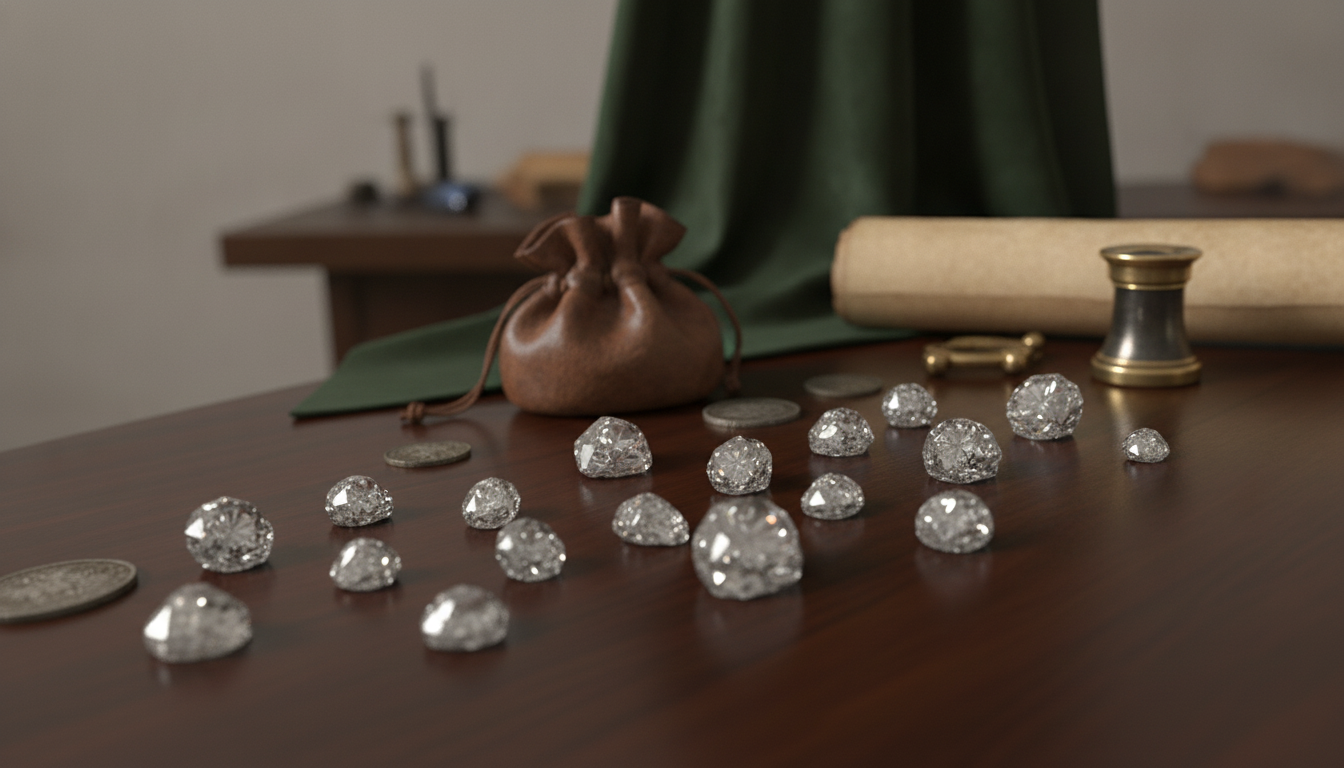
Yes. Diamonds absolutely existed in medieval times, and people across Europe, the Middle East, and South Asia knew them as rare, extremely hard stones that could be worn, traded, and prized for their mystique. What didn’t exist yet was the modern diamond market—or the brilliant, sparkly look most people picture today.
Medieval diamonds mainly entered European courts through long-distance trade routes that connected to India, which was the most important known source of diamonds for many centuries. These stones were typically natural crystals or simple shapes rather than the carefully proportioned cuts common now.
Because cutting technology was limited, medieval diamonds were often polished rather than faceted. That meant they could look more like clear (or slightly tinted) gemstones with a subtle sheen instead of a fire-and-scintillation showpiece. Diamonds still carried prestige, though, and they were used in rings, brooches, reliquaries, and ceremonial objects—especially among royalty and high clergy.
Today’s sparkle comes from precise faceting that manages how light enters and exits the stone. In medieval Europe, lapidary techniques were not yet advanced enough to cut diamonds into complex facet patterns, partly because diamond is so hard. Early diamond “cuts” were often point cuts or table cuts that appeared later in the period, aiming more for a clean surface than maximum brilliance.
Diamonds also carried symbolic and even protective meanings. Medieval writings frequently described them as stones of strength, purity, or invincibility, which made them appealing beyond their beauty.
If the darker, dramatic side of medieval-inspired design is what draws you in, you might enjoy how “black diamond” finishes echo that mood in lighting and décor. For a style-focused take on the look, see this guide to a black diamond medieval floor lamp (E27 LED).
Most diamonds reached medieval Europe through trade networks tied to India, moving through Middle Eastern markets and Mediterranean trade centers before arriving at European courts and workshops.






Leave a comment