Measure for a U-Shaped Sectional With Storage: Fit Guide
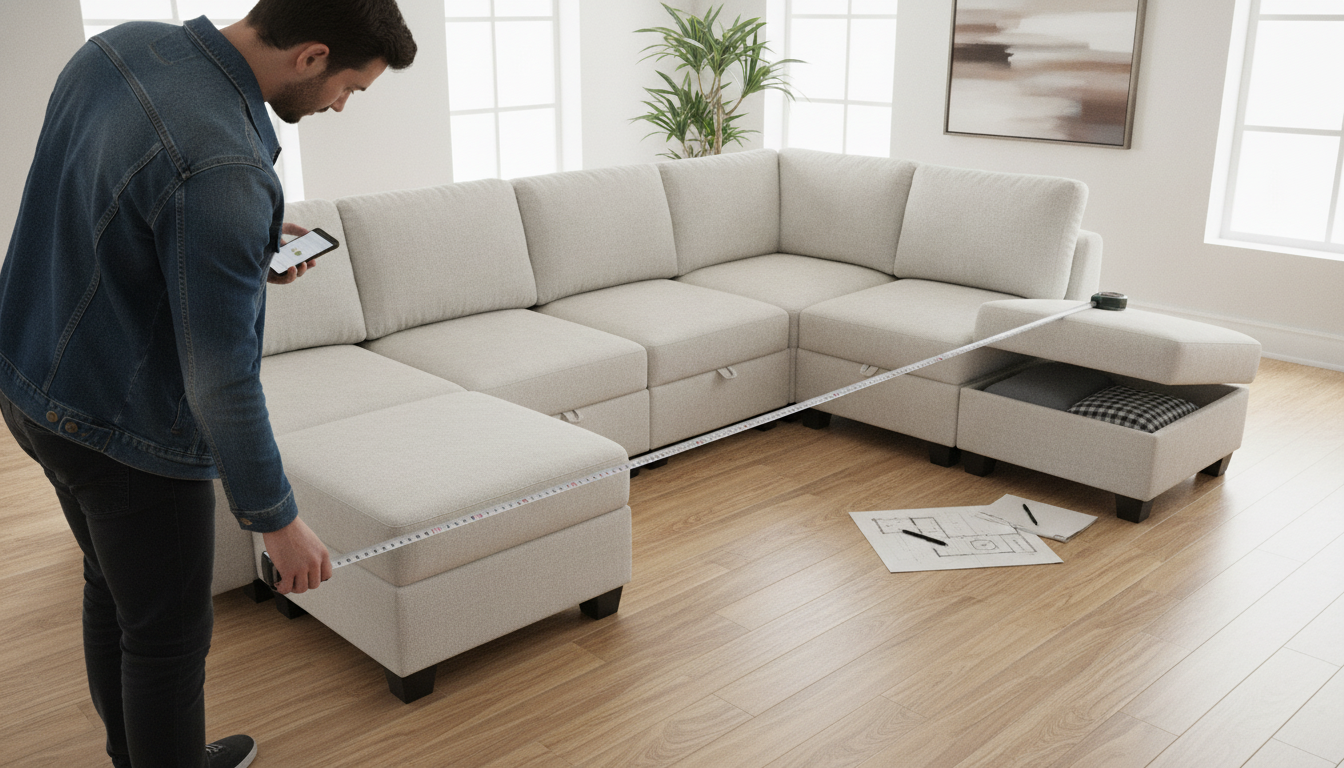
How do you measure your space to fit a U-shaped sectional with storage?
A U-shaped sectional with storage can transform a living room, but it only works if it fits your floor plan and still leaves clear walking paths. Before you shop, take a few quick measurements and map them to the sectional’s full footprint (not just the sofa width). Storage chaises and lift-up seats often add depth and need extra clearance to open comfortably.
1) Measure the room and define your usable zone
Start with a tape measure and note the room’s length and width in inches. Then mark the “usable” seating zone by accounting for doors, radiators, vents, built-ins, and windows you don’t want blocked. If your sectional will face a TV or fireplace, measure from that focal point to where you want the front edge of the seating to land.
2) Identify the sectional’s key dimensions
When comparing models, focus on overall width (left-to-right span), overall depth (front-to-back), and each arm/chaise length. For a U-shape, confirm the depth of both side sections and the center seat span. If the storage is under the chaise or seat, note the lid/hinge direction and how far it swings open.
3) Plan for clearance and walkways
Leave comfortable circulation space around the sectional—especially at entry points and between the sofa and coffee table. A common target is about 30–36 inches for main walkways, with roughly 14–18 inches between the seat edge and a coffee table (adjust to your room and lifestyle). For storage access, ensure you have enough open floor area for the lid or drawer to open without hitting a table or wall.
4) Tape it out on the floor
Use painter’s tape to outline the sectional’s footprint, including the deepest chaise portions. Add extra taped “swing zones” where storage lids lift or drawers pull out. This makes it easy to see pinch points, door conflicts, and whether the U-shape feels too dominant in the space.
5) Don’t forget delivery and assembly
Measure hallways, stair turns, elevators, and door widths. Compare those numbers to the largest individual sectional piece, not the assembled sofa. Storage components can make sections heavier and bulkier, so confirm the product’s packaged dimensions and whether legs or backs detach.
For a more detailed walkthrough and measurement tips, visit the full guide here.
FAQ
How much space should you leave around a sectional for walking?
Aim for about 30–36 inches for main walkways, especially near doors and high-traffic routes. If space is tight, keep at least 24 inches where possible, and test it with taped outlines before buying.













Leave a comment