Coffee Table Size Guide: Drawers, Sofa & Room Fit
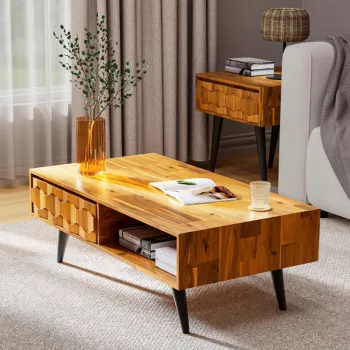
What size solid wood coffee table with drawers works best for my sofa and living room layout?
The best size comes down to three measurements: length relative to your sofa, clearance for walkways, and a height that sits comfortably below the seat cushion. A solid wood coffee table with drawers is especially worth sizing carefully because the drawer side needs extra room to open without bumping knees or nearby seating.
Start with the right length
A dependable target is a coffee table that’s about two-thirds the length of your sofa. For a 72-inch sofa, that typically means a table around 48 inches long; for an 84-inch sofa, look near 54–56 inches. This proportion keeps the table reachable from both ends of the couch without overwhelming the room.
Match the height to your seating
Choose a table height that’s level with the top of your sofa seat cushion or 1–2 inches lower. In many living rooms that lands around 16–18 inches high. If your sofa sits tall and upright, a slightly higher table can feel better for dining; for deep, lounge-style sofas, staying lower usually feels more natural.
Plan clearance for traffic and drawers
Leave about 14–18 inches between the sofa and the coffee table for comfortable legroom. For main walkways, aim for 24–36 inches so people can pass without turning sideways. If your table has drawers, make sure there’s enough space on the drawer side for a full pull-out—measure the drawer depth and add a few inches so it opens smoothly without hitting a chair, ottoman, or rug edge.
Pick a shape that fits the layout
Rectangular tables work best with standard sofas and sectionals with a long, straight edge. Round or oval tables are safer in tight spaces and make it easier to flow around corners, especially with a sectional chaise. For narrow rooms, a slimmer table (or one with tapered legs) can keep the space feeling open while still providing drawer storage.
For a deeper sizing guide and examples by room type, visit the main article.
FAQ
How much space should I leave around a coffee table for comfortable walking?
Keep 24–36 inches of clearance on the primary walking paths. In tighter rooms, 24 inches can work, but 30+ inches will feel noticeably easier for everyday movement.













Leave a comment